
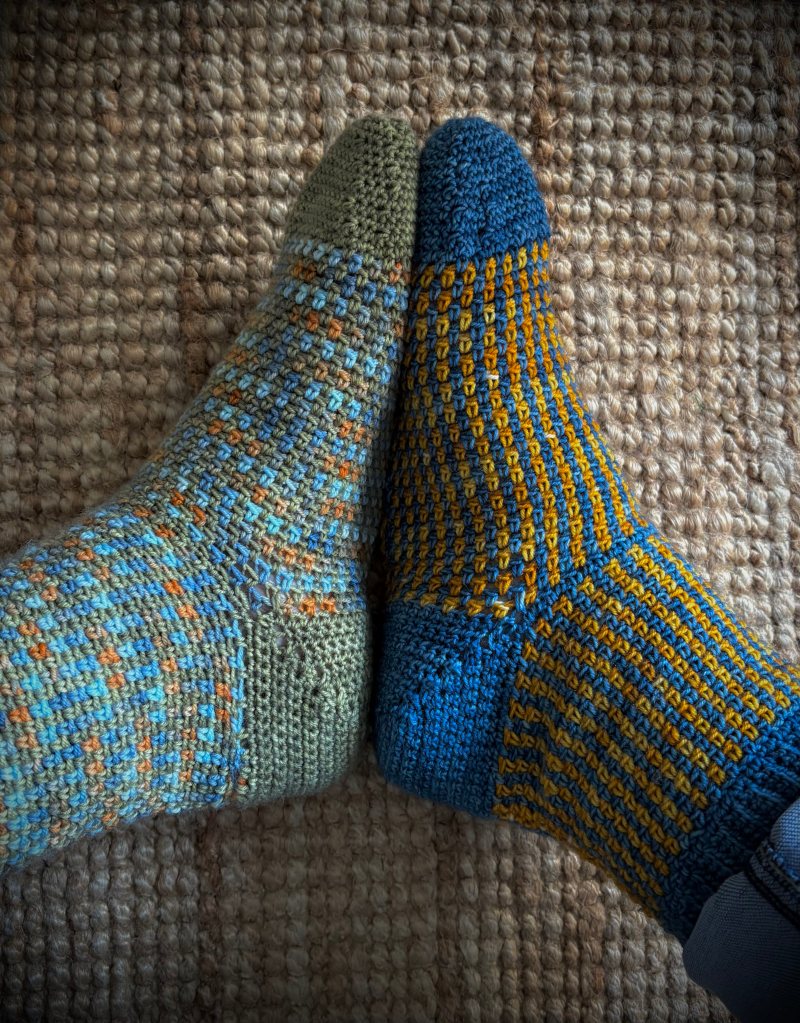
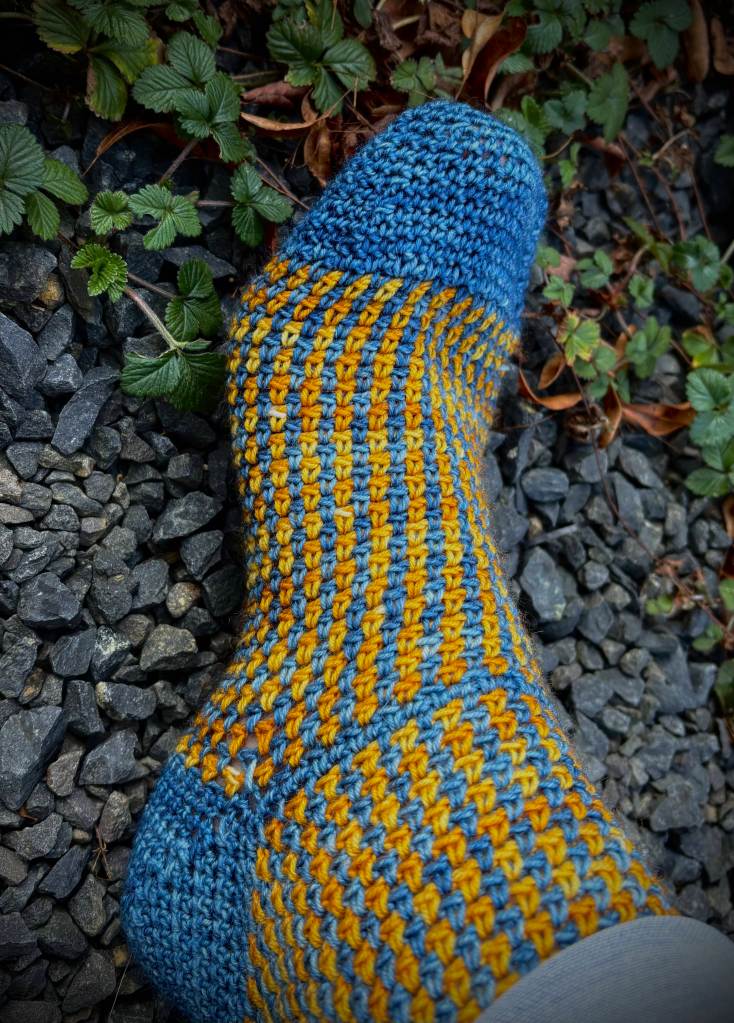
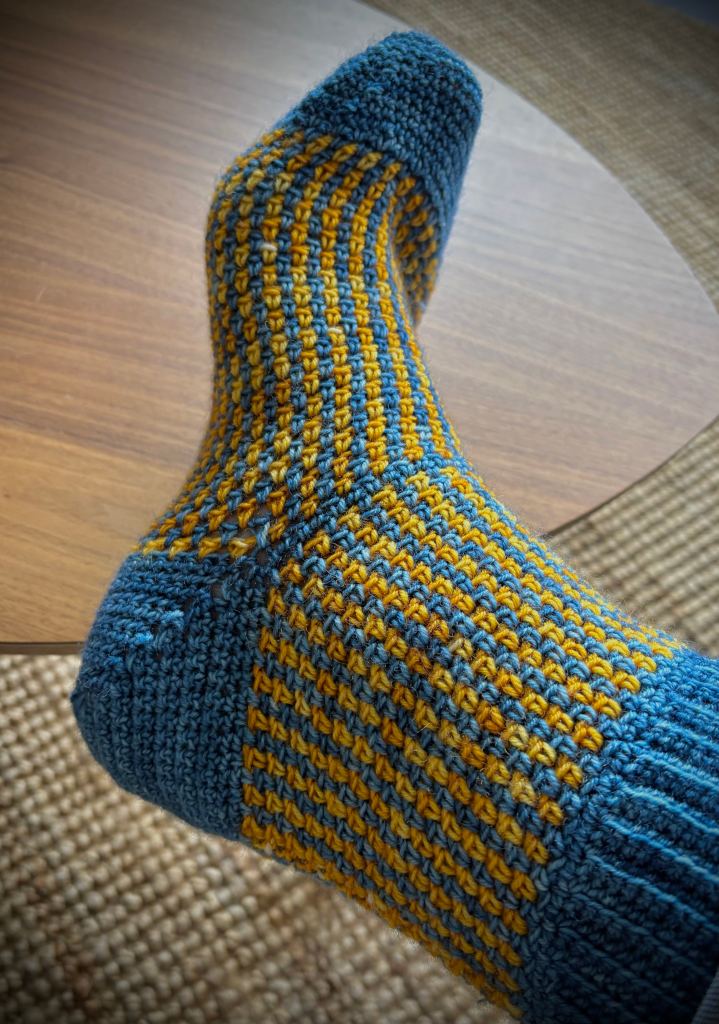
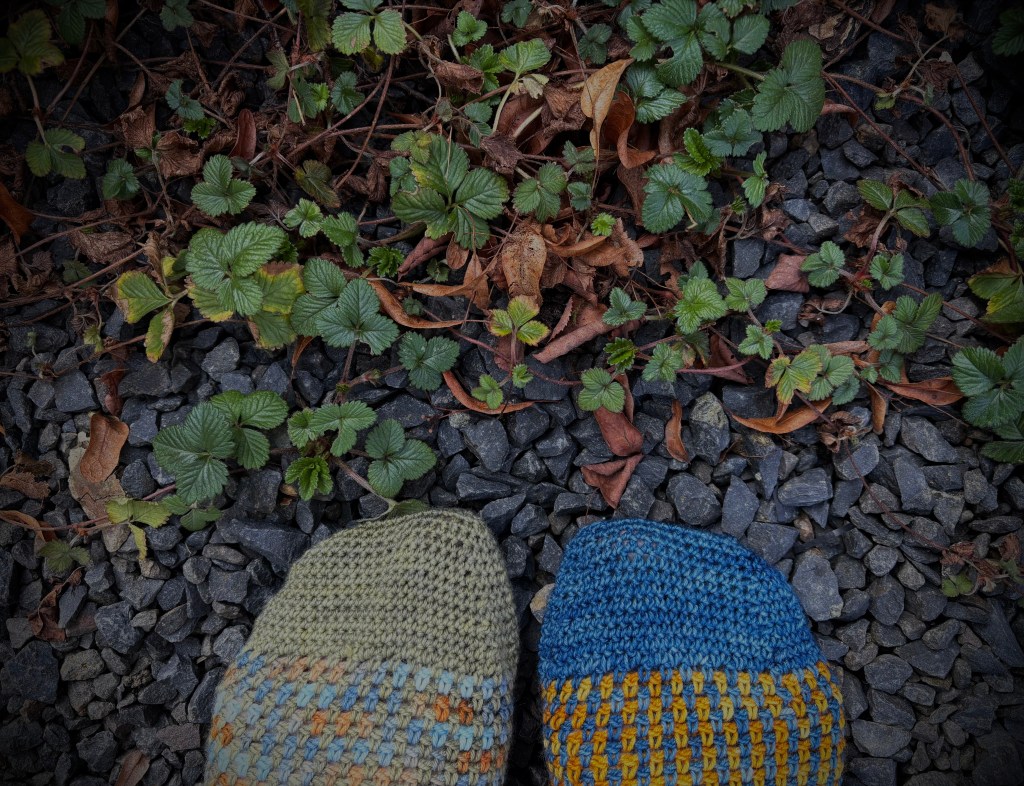
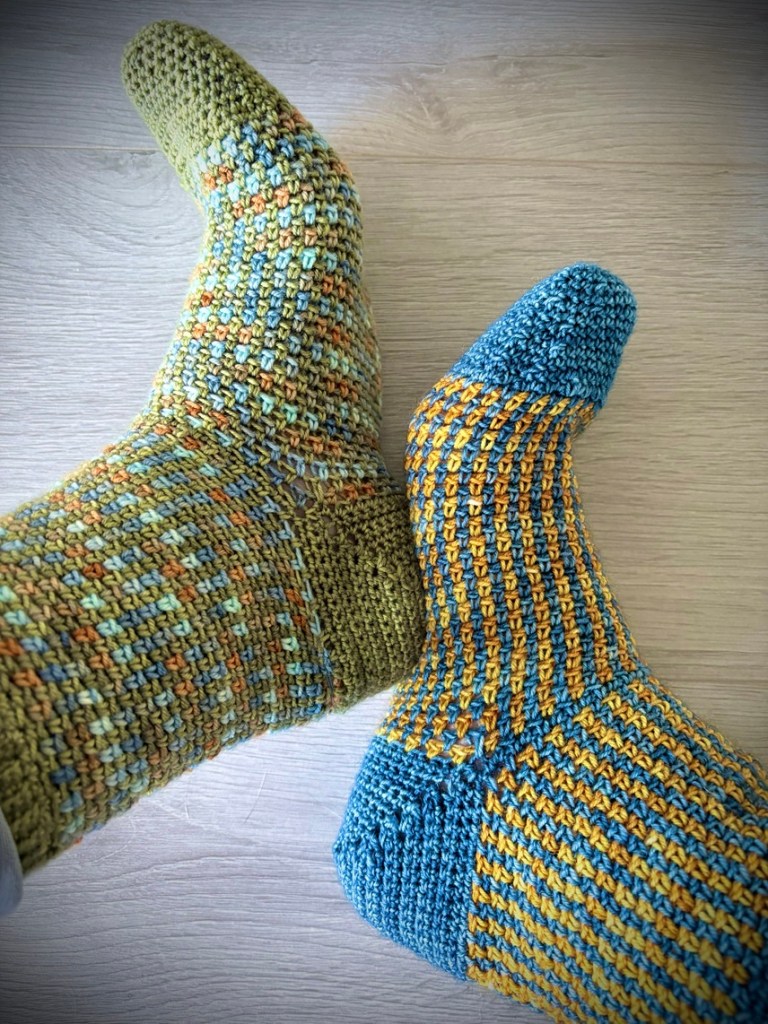
A new sock pattern! While dyeing a new yarn collection inspired by Vincent van Gogh’s paintings, I delved a bit deeper into them. I came across the technique van Gogh used to create most of his iconic paintings. By applying thick stripes of oil paint in an organic way to a canvas, he created beautiful art. This technique is called Impasto. So, inspired by the Impasto technique and my new sock yarn colors, I had to create a wonderful new sock pattern. The third pattern in my crocheted socks collection. It holds the base of the first two as well, and yet is different. A lovely crocheted sock with a beautiful pattern in it.
And talking about a new yarn collection, I mean the Van Gogh collection I dyed as Veluwsch Verfgoed. You can find it here:
Veluwsch Verfgoed van Gogh collection
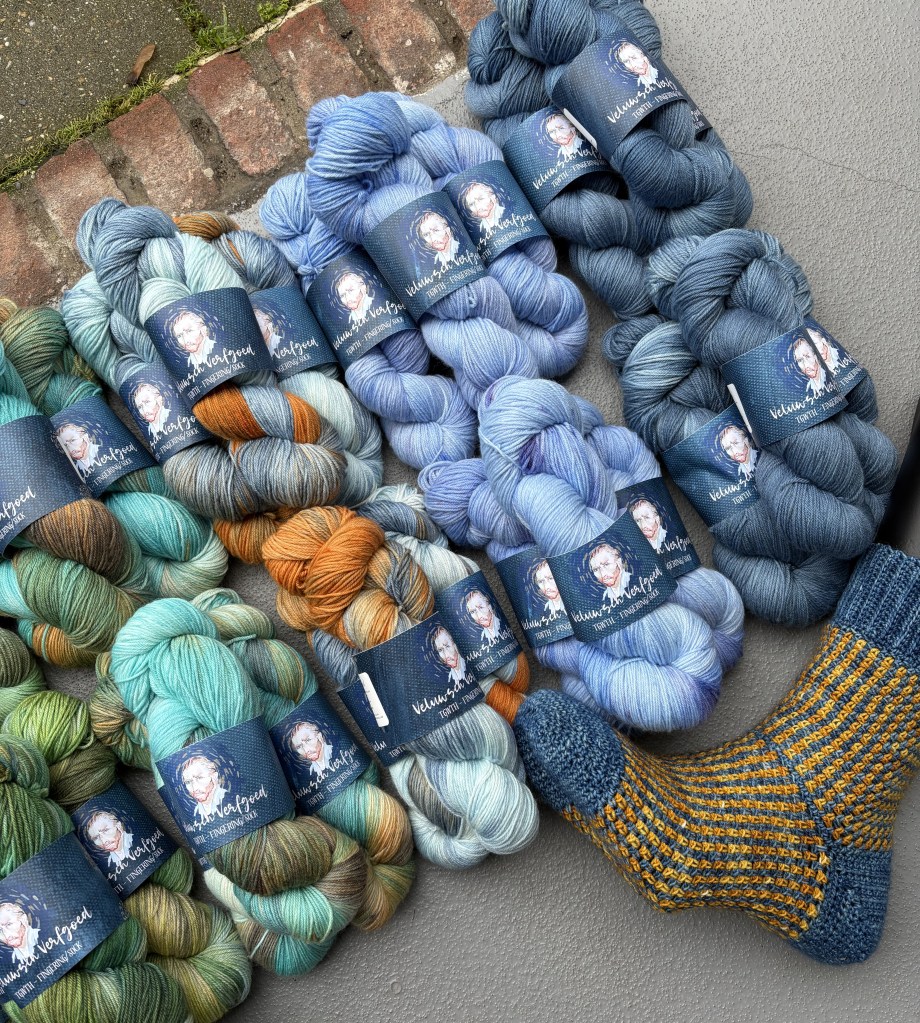
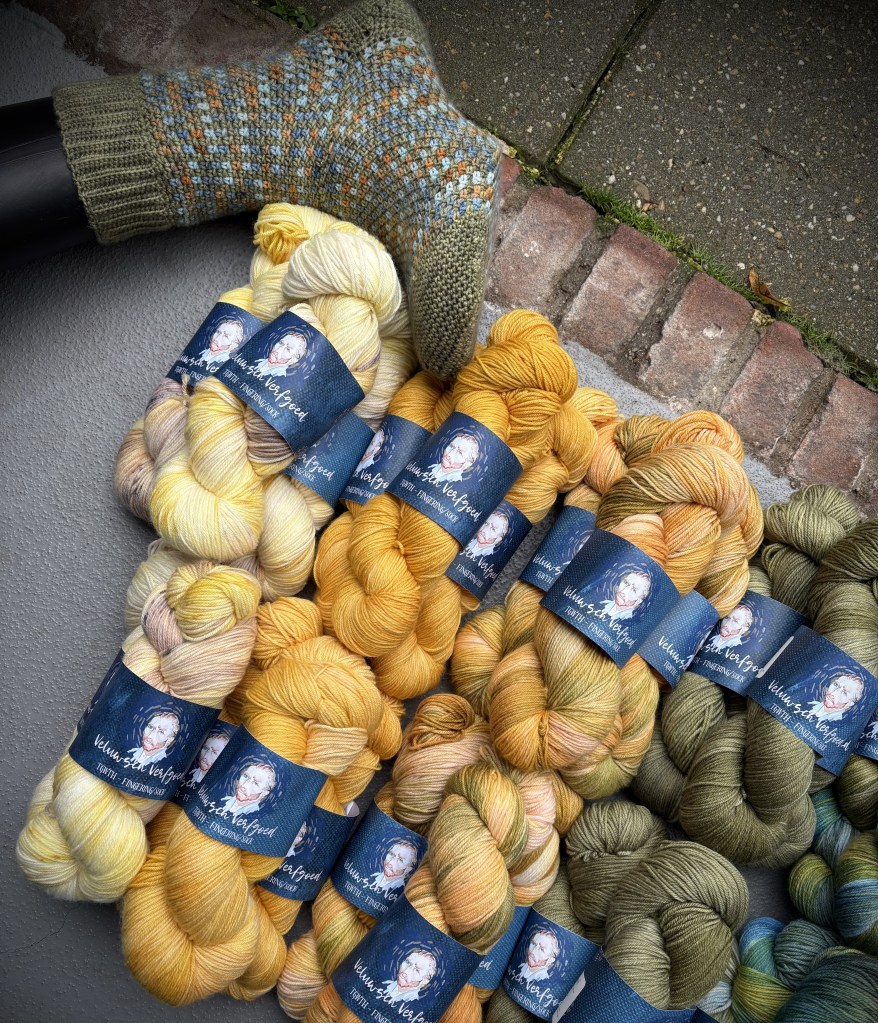
Above you can see some of the colors I dyed on famous paintings by van Gogh, as the Veluwe, where Veluwsch Verfgoed was inspired by, has a strong connection to van Gogh. He not only wandered around the Veluwe for several months, but we also have the Kröller-Müller museum, which holds the largest collection of van Gogh paintings. Reasons enough for me to deepen out this theme in yarn and pattern work! If you like to see more about the yarn in real or have all updates live, please watch my Veluwsch Verfgoed vlogs in which I am talking about this:
Okay, time to move on to the pattern! It is the third sock pattern I created in my crocheted socks collection. This one is once again built from different stitches, and the first sock has more colors to work with! As said, I wanted to re-create the painted stripes by van Gogh in this sock, and it worked out pretty well. Using the van Gogh colors really lets things pop out and connect! If you are curious about the first two sock patterns, you will find them here:
Ultimate guide to crochet basis socks
Some general information about the pattern:
Required yarn: Any sock yarn will do for a crocheted sock, whether it is hand-dyed or just a standard ball from the factory. You have the right yarn thickness as long as your sock yarn has a ratio of about 400-420 meters per 100 grams. Also, always choose a yarn that contains a small percentage of nylon to make the sock more durable. Most sock yarns already have this. For this sock, you must use a slightly thinner sock wool thread. So, do not choose a material with less than 400 meters per 100 grams.
The amount of yarn required also depends mainly on your shoe size. Crocheting socks always requires more yarn than knitting socks, and a good benchmark is that you need one and a half times as much yarn for a crocheted sock as for a knitted sock. However, tests show that for this pattern up to a shoe size 40 (EU), you will need 100 grams of sock wool. Each size above that requires about 110-150 grams of sock wool. It also varies by the length of the leg and toe pieces you choose.
For this sock, we will use two colors of sock yarn. You can make the pattern in a single color as well; for that, use the amounts listed above. If you pick two colors, you need one 100-gram skein of each for all sizes. In both examples, I used Veluwsch Verfgoed Sock in 100-gram skeins with a length of 400 meters. The yarn consists of 75% merino yarn and 25% nylon.
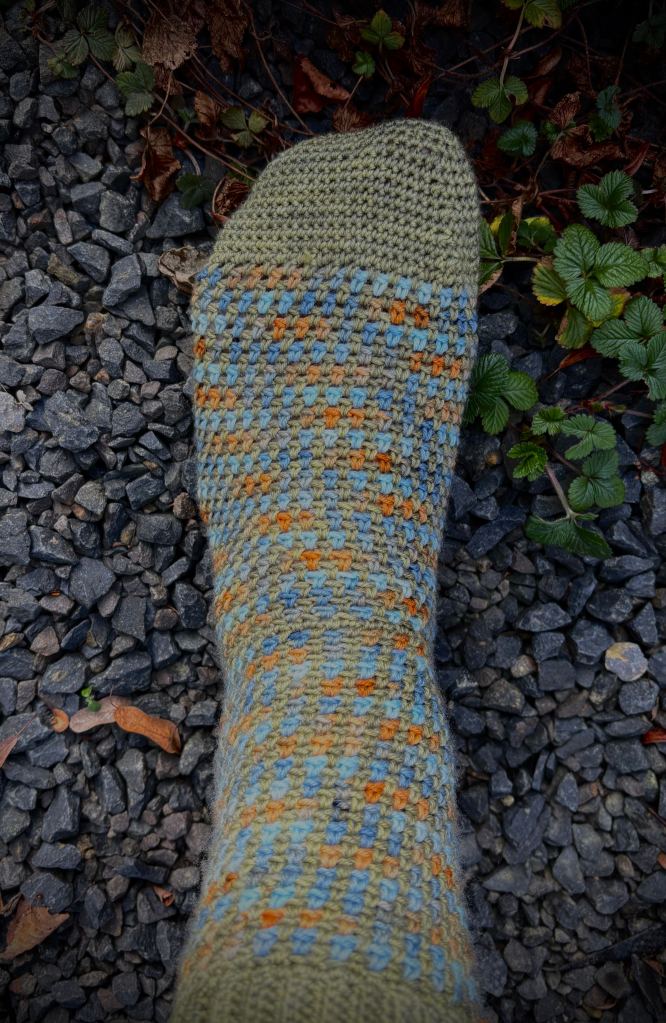
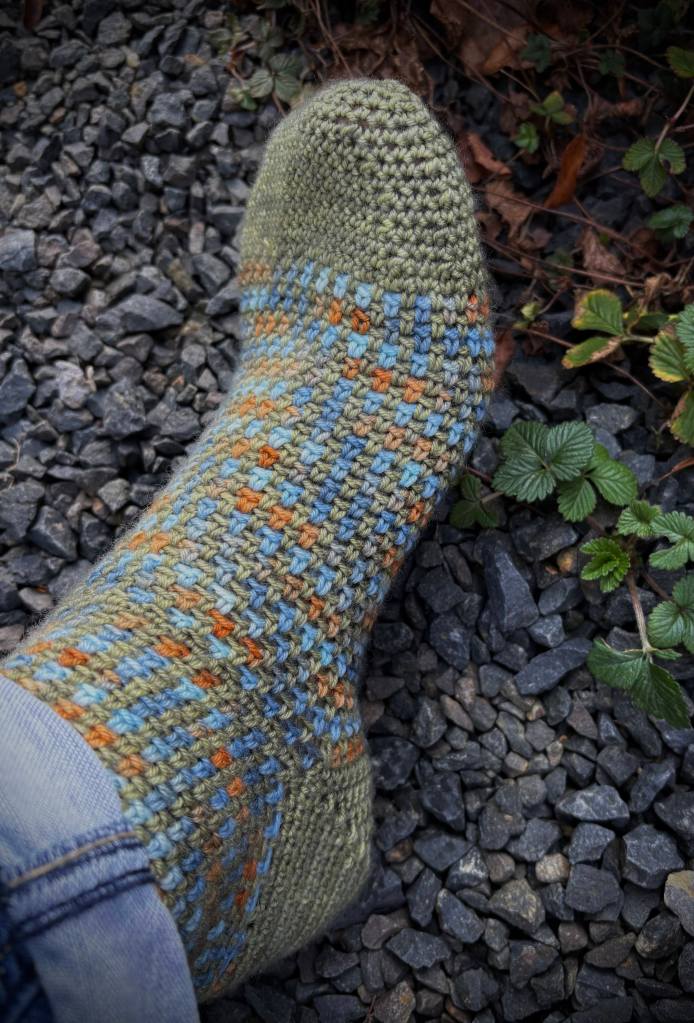
The green/blue/orange version is made with colorway Cyprus and Vincent Selfportrait. The dark blue/yellow version is made with Starry Starry and Starry night above the Rhone.
Crochet hooks needed:
For the sock pattern, you will need a 2.5mm crochet hook for the cuff. For the rest of the sock use a 4.5mm and 5.0mm crochet hook.
size: A crocheted sock does not follow standard stitch counts for shoe sizes. So, there is no standard table of sizes. The entire pattern guides you step by step to determine the correct stitch numbers and lengths in the sock. Take note that the pattern only works for centimeters.
As mentioned, crocheting a sock is done by measuring and calculating. Every foot is different; sometimes your instep is a little thicker than your upper leg. Or your toes are a little longer than someone else’s. You can take all of this into account with this pattern. However, measuring precisely as a few millimeters can already ensure that your sock does not fit properly because calculations are different.
-For this pattern, it is useful if you have a flexible measuring tape or a centimeter. In addition, two stitch markers are also useful—although you can also solve this with a small thread of leftover yarn.
!!!The patterns, calculations, and math will not work with inches. Therefore, please refer to centimeters, even if this is not the standard used in your part of the world for math. It is necessary to let the calculations work for a good outcome. Most of the time, measurement tapes hold centimeters and inches, and it should be no problem!!!
Where to get the pattern? As usual, you will find it on my Ravelry and Etsy shop if you prefer a digital version of the pattern. After purchase, you can download the pattern in a PDF file in all available languages. This will be English (US) and Dutch. You will find it here:
However, as these patterns require a lot of information to absorb and process, I also have them in a booklet. Of course, the costs for a booklet are a bit higher due to printing. If you prefer this, the booklet can be found here in both languages available:
 theguywiththehook.com
Geef een reactie